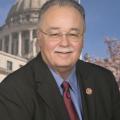
Hello, my name is Gene Newman and I am thankful for the opportunity to represent the voters of Mississippi House of Representative District 61. As a Pearl school graduate who has lived in Pearl for most of my life, I have been a dedicated community leader committed to bringing a strong voice to the area. If you have a legislative issue or any issue or problem dealing with a state agency, please contact me and I will do my best to help.
 I will post House updates below and on the @genenewman61 Facebook page.
Here are the House Committees that I serve on:
Here is a link to bills that I have sponsored or cosponsored in the 2025 session: Legislation introduced by Representative Gene Newman
Thank you!
- Gene
You can call or text me at: 601-316-2491
You can email me at gene@genenewman.ms
RULES: If you put me in a group text or a chain email - I will block you.
Mississippi House of Representatives – Special Session 2025
In the early morning hours of May 28, the Mississippi House of Representatives adjourned sine die, officially concluding the 2025 Extraordinary Special Session. Governor Tate Reeves called the session to finalize the state’s Fiscal Year 2026.
Over the course of two days, House members worked diligently to meet their constitutional obligation of funding the essential functions of state government. Lawmakers passed more than 100 appropriations bills, ensuring continued support for vital services such as education, public safety, infrastructure, mental health, Medicaid, human services, transportation, economic development, and corrections.
The approved budget totals $7.861 billion that appropriated $3.321 billion to K-12 education to fully fund the Mississippi Student Funding Formula and reflects a strong commitment to maintaining Mississippi’s fiscal stability. Institutions of Higher Learning was given a total state support budget of $838.3 million, and Community and Junior Colleges was budgeted at $299.3 million.
Other budgets included:
- University of Mississippi Medical Center, $198.9 million.
- Department of Public Safety, $177.6 million.
- Mississippi Department of Health, $94.2 million.
- Department of Mental Health, $278.7 million.
- Mississippi Development Authority, $22.7 million.
- Mississippi Department of Insurance, $13.5 million.
- Department of Corrections, $438.2 million.
- Division of Medicaid, $969.8 million.
With the new fiscal year beginning July 1, this budget provides a clear path forward to meeting the state’s immediate needs and long-term priorities.
The House convened at 11 a.m. on May 27 and completed its business around 1 a.m. on May 28. Before adjourning, members paused to honor the memory of several individuals, most notably the late son of Representative Gregory Holloway, whose recent passing was deeply felt across the chamber.
2025 Mississippi Legislative Session
2025 Summary of Major Legislation
Week of March 31, 2025
Mississippi House of Representatives – Final Week Report
Thirteenth and Final Week of the 2025 Legislative Session
The Mississippi House of Representatives gaveled in at 1:00 PM on Monday, marking the start of the thirteenth and final week of the 2025 Regular Legislative Session. This week was marked by significant legislative activity, the passage of key bills and the final adoption of conference reports on general and revenue bills.
Throughout the week, the House also took time to recognize the accomplishments of outstanding Mississippians and host visitors from across the state. A series of heartfelt resolutions were adopted, highlighting the spirit of community and excellence that exists throughout Mississippi.
Among the resolutions passed was House Resolution 34, commending longtime broadcaster Jim Ellis on his retirement after 46 years as the play-by-play voice of Mississippi State University baseball. Known affectionately as “The Voice of the Diamond Dawgs,” Ellis has been a cornerstone of MSU athletics. He called numerous NCAA tournaments, SEC championship games, and was behind the mic for the Bulldogs’ first national title in 2021. The resolution honors his unparalleled contributions to sports broadcasting and expresses gratitude for his enduring impact on Mississippi athletics.
House Resolutions 119 and 123 recognized two exceptional high school football programs. The Kirk Academy Raiders were honored for winning the 2024 MAIS Class 3A State Championship. Players and coaches alike were commended for their strong performances and leadership on and off the field. Similarly, the Grenada High School Chargers received recognition for securing their first-ever MHSAA Class 6A State Championship
The House also adopted House Resolution 128, celebrating the Jackson Prep Lady Patriots Basketball Team for capturing the 2024–2025 MAIS Class 6A State Championship. This win marked their 10th state title, secured through a decisive fourth-quarter comeback that demonstrated determination and skill.
Additionally, House Resolution 115 was passed to honor the Ingomar Lady Falcons Basketball Team for winning the MHSAA Class 2A State Championship. Their 58–28 victory marked a third consecutive title and the program’s fourteenth overall. With a remarkable 32–2 season record, the team’s success is attributed to dedicated coaching, cohesive teamwork, and a longstanding tradition of basketball excellence in Union County.
In addition to celebratory resolutions, several notable pieces of legislation were finalized this week:
- HB 1544, as passed by the Mississippi House, proposes extensive amendments to the Mississippi Code to revise the number of judges and residency requirements across various circuit and chancery court districts throughout the state. It updates district compositions, reassigns precincts, adjusts judicial positions, and schedules a special election in 2025 to fill a new circuit judge seat. These changes aim to align judicial resources with population shifts, caseloads, and geographic needs.
- HB 1193, prohibits public schools and public postsecondary institutions from promoting diversity, equity, and inclusion (DEI) programs, using diversity statements in hiring or admissions, or endorsing “divisive concepts.” It mandates that these institutions teach there are only two genders, male and female, defined by chromosomal makeup. The bill also allows private enforcement, mandates annual compliance reporting, and authorizes the Attorney General to ensure compliance.
- HB 599 allows individuals to file civil lawsuits against commercial entities that knowingly publish obscene material or child pornography online. The bill carefully defines key terms and includes exemptions for internet service providers and news organizations that are not responsible for producing the content.
- HB 1341 extends the Mississippi Health Care Industry Zone Act through July 1, 2028. This extension maintains vital tax incentives—including ad valorem and sales tax exemptions—as well as fee-in-lieu agreements, to support qualifying health care facilities and businesses that meet specific investment and job creation benchmarks.
- HB 1203 addresses unauthorized camping on public property not designated for that purpose. The bill permits the removal of individuals and belongings and imposes a fine of up to $50. Courts are also granted discretion to consider mitigating circumstances and alternative outcomes when enforcing penalties.
- HB 1461 expands the definition of "capital improvements" to include any project approved by the Mississippi Development Authority. This broadened definition enhances eligibility for local government loan funding, potentially enabling a wider range of community development projects across the state.
- The House also worked very hard on HB 1123 to provide support for our independent pharmacists while also protecting employer and consumer drug prices. Although an agreement was met with a conference report, it died on the calendar after a point of order was raised.
The House sent a resolution to suspend the rules of the Legislature, giving the Senate until 5:00 p.m. on April 2 to consider and vote on the measure. The Senate did not take up the resolution; therefore, the rules were not suspended, and the House subsequently adjourned sine die on Wednesday, April 2. While this concludes the regular session's business, a special session will be necessary to reach a final agreement on the state budget by the close of the fiscal year.
This week in Pearl - Under the Dome March 30, 2025

Week of March 24, 2025
The Mississippi House of Representatives convened at 4:00 PM on Monday to begin the twelfth week of the 2025 legislative session.
Throughout the week, the House recognized several notable resolutions:
- House Concurrent Resolution 32 honors the life and service of James Henry Taylor of Olive Branch, Mississippi, who perished aboard the secretive Flying Tiger Line Flight 739 during the Vietnam War. Though his name is not inscribed on the Vietnam Veterans Memorial, a newly erected monument in Maine now commemorates Taylor and all those aboard the ill-fated flight.
- House Concurrent Resolution 43 recognizes Charles F. McClelland, Sr. for his distinguished career and exemplary public service. As a former athlete and educator, McClelland has made significant contributions through leadership in education, civic engagement, and government initiatives, leaving a lasting legacy across the state.
- House Resolution 100 commends Miss Izzy Karns for being crowned Miss Teen Volunteer America. A student at the University of Southern Mississippi, Karns is celebrated for her dedication to volunteerism, animal welfare advocacy, and her entrepreneurial efforts in social media branding.
Additionally, Speaker White welcomed the Northwest Mississippi Community College women’s soccer team to the chamber in recognition of their NJCAA National Championship victory—the first national title in the program’s history.
- HB 569 amends Section 41-7-191 of the Mississippi Code to allow a long-term care hospital in Harrison County to participate in the Medicaid program as a crossover provider. It revises the conditions under which a Certificate of Need (CON) is issued, enabling the facility to expand access and eligibility for Medicaid reimbursement. The bill primarily focuses on adjusting regulatory provisions for healthcare facility operations and Medicaid participation.
- HB 599 amends Mississippi law to define "child pornography" and "obscene matter" and allows individuals to bring civil lawsuits against commercial entities that knowingly publish such content online. It excludes liability for internet service providers and similar entities that are not responsible for content creation. The bill also includes a severability clause and will take effect on July 1, 2025.
- HB 1063, titled the Mississippi State Employees Paid Parental Leave Act, establishes six weeks of fully paid parental leave for eligible state employees who are the primary caregivers of a child following birth or adoption. The leave must be used within 12 weeks of the qualifying event and does not count against other accrued leave. It also permits school districts and community colleges to adopt similar policies and includes provisions for notice, eligibility, and coordination with the Family and Medical Leave Act.
On Thursday, Governor Reeves signed House Bill 1 into law, officially eliminating the state income tax. He was joined by Speaker White, Lieutenant Governor Hosemann, Chairman Trey Lamar, Chairman Josh Harkins, and several members of both the House and Senate.
Looking ahead, the House faces a deadline for Monday, March 31, for final adoption of conference reports on appropriations and revenue bills; and deadline for conference reports on general bills and constitutional amendments to be filed.
The House is set to reconvene on Monday at 1:00 PM.
This Week in Pearl - Under the Dome - March 24th, 2025
Week of March 17, 2025
The Mississippi House of Representatives reconvened at 4:00 PM on Monday for the eleventh week of the 2025 legislative session. Lawmakers began with a moment of silence for those lost in recent severe storms.
On Tuesday, March 18, the House met the deadline for action on appropriation and revenue bills from the other chamber. Several bills advanced to the conference stage, where the committee chairmen will appoint members to finalize legislation.
Two resolutions honored public service: HR 78 recognized former Representative Wanda Jennings, and HR 82 paid tribute to Charles Lemuel Young Jr.
The House passed major fiscal policy bills and aimed to tax reform and infrastructure funding. SB 3095 proposes gradually reducing state income tax rate to 2.99% by 2030 while cutting the sales tax on groceries to 5% starting in 2025. To offset revenue losses, excise taxes on gasoline and special fuels will increase from 2025 to 2027, with some redirected toward infrastructure.
HB 1, the “Build Up Mississippi Act,” introduces tax changes and revenue reallocations:
Tax Reform Measures
- Income Tax Reduction: The state income tax rate will decrease by 0.25% annually from 2027 to 2030, reaching 3%, with further reductions contingent on revenue growth and budget conditions, aiming for full elimination.
- Grocery Sales Tax: The sales tax on groceries will drop from 7% to 5%, effective July 1, 2025.
- Fuel Tax Adjustment: Gasoline and diesel taxes will increase by 9 cents over three years, reaching 27.4 cents per gallon. Beginning July 1, 2029, adjustments may occur biennially, capped at 1 cent per gallon, based on federal highway construction cost averages.
- Legislative Compromise: The fuel tax adjustment was essential to securing legislative approval for the broader tax relief package.
- Fiscal Impact: The plan delivers a net tax cut exceeding $1 billion. For most households, grocery tax savings will offset or surpass fuel tax increases.
- Taxation Model: The changes promote a user-based taxation system, shifting the burden from direct taxation of labor to consumption-based contributions.
PERS Reform
- Current Members: No changes to benefits or cost-of-living adjustments (COLAs) for existing Public Employees Retirement System (PERS) members.
- New Employees: Individuals hired after March 2026 will enter a Tier 5 hybrid retirement plan, integrating a reduced defined benefit with a defined contribution component, alongside additional state contributions.
- Long-Term Stability: The new tier aims for full funding by 2064, preventing a projected $20 billion deficit by 2075 under the current structure.
Looking ahead, the next major deadline is March 27, to concur or not to concur on amendments from other house to general bills and constitutional amendments.
House is set to reconvene Monday at 4:00 PM.
This Week in Pearl: Under the Dome March 12, 2025
Week of March 10, 2025
The Mississippi House reconvened at 2:00 PM on Monday, marking the start of the tenth week of the 2025 legislative session. Several key bills were passed, addressing a range of policy areas.
The House observed a moment of silence in honor of the three victims who lost their lives in the UMMC Air Care helicopter crash in Madison County earlier this week: Med-Trans Pilot Cal Wesolowski, Critical Care Paramedic Jakob Kindt, and Flight Nurse Dustin Pope.
Several bills were passed this week, some of which have been sent to conference. During conference week, Speaker White and Lieutenant Governor Hosemann will each appoint three members from their respective chambers to negotiate and reach an agreement on the final version of the legislation.
HB 913 establishes clear labeling requirements for meat and meat substitute products to prevent consumer confusion. The bill mandates that the Mississippi Department of Agriculture inspect food processing plants, retail stores, and food establishments based on credible complaints regarding misbranded meat products. It enforces penalties for violations and requires clear labeling and disclosure at the final point of sale to distinguish between meat and meat alternatives.
SB 2835 creates the Mississippi Emergency Communications Authority within MEMA to oversee and modernize emergency communication systems. The bill sets a goal of implementing Next Generation 911 (NG911) statewide by 2030. It establishes a statewide advisory board, introduces an Emergency Communications Service Charge to fund upgrades, and mandates financial audits for transparency. Counties will have the ability to coordinate emergency communication districts under new technical and operational standards.
SB 2426 establishes the Artificial Intelligence Regulation (AIR) Task Force to evaluate the risks, benefits, and policy implications of AI in Mississippi. The task force will examine AI applications, privacy concerns, ethical standards, and potential government uses. It will report findings to the Legislature annually until its dissolution in 2027. The task force is authorized to seek funding, appoint advisory members, and propose policy recommendations to balance innovation with public safety and regulatory oversight.
SB 2573 creates the Mississippi Department of Tourism, transferring tourism-related responsibilities from the Mississippi Development Authority. The bill establishes an executive director, appointed by the governor, to oversee the department. It also introduces a grant program for tourism entities and a marketing advisory board to guide promotional efforts. A portion of sales tax revenue from restaurants and hotels will be diverted to fund tourism advertising, streamlining the state's tourism governance structure.
SB 2555 amends Mississippi Code Section 67-5-11 to allow native wineries to sell directly to consumers or the Department of Revenue at one satellite location within the same county as their original site. It also permits onsite pickup for wines and distilled spirits sold by the Department of Revenue to retailers, eliminating the requirement for shipment to the department's warehouse. This bill aims to expand market access for local wineries while simplifying distribution processes.
The House faces a deadline for Tuesday, March 18, for original floor action on appropriation and revenue bills originating in other house.
The House is set to reconvene 4:00 PM on Monday.
Week of March 3, 2025
The Mississippi House convened at 4:00 PM on Monday, marking the ninth week of the legislative session. A key March 4 deadline was met, requiring committees to report general bills and constitutional amendments from the opposite chamber.
House Resolution 81 honors the late Robert George Clark, Jr., recognizing his historic achievement as the first African American elected to the Mississippi Legislature in the 20th century. The resolution commemorates his leadership as Speaker Pro Tempore, his dedication to education, civil rights, and public service, and extends heartfelt condolences to his family and friends. His legacy continues through his son, Representative Bryant Clark, who currently serves in the House.
On Wednesday, the House welcomed the award-winning Holmes County Central Singers, who performed the National Anthem. Founded in 2018 by Mr. Pierrdro Gallion, the choir has earned top ratings and performed at Carnegie Hall in April 2023.
The House passed several Senate Bill this week, including:
- JR 202 – Adjusts Mississippi State Senate districts in response to a federal court ruling, ensuring compliance with the Voting Rights Act while minimizing disruptions.
- SB 2424 – Establishes the Entertainment Industry and Workforce Development Task Force to evaluate polices and propose strategies for growing Mississippi’s creative economy, with recommendations due by December 1, 2025
- SB 2280 – requires hunters to obtain a wild turkey stamp, with exemptions for minors, seniors, and disabled individuals. Proceeds will support conservation and research efforts. The law takes effect on July 1, 2025.
- SB 2276 – Extends hunting seasons for deer, bobwhite quail, wild turkey, squirrels, rabbits, and fur-bearing animals. If the open season ends on a Friday, it will now extend until 30 minutes after sunset on the following Sunday.
- SB 3055 – Appropriates funds for the Mississippi Department of Tourism for fiscal year 2025-2026, contingent on the passage of SB 2573, which establishes the department.
The House faces a March 12 deadline for original floor action on general bills and constitutional amendments originating in the other chamber.
The House will reconvene on Monday at 2:00 PM.
Week of February 24, 2025
The Mississippi House of Representatives convened at 4:00 PM on Monday for its scheduled legislative session, addressing key legislative matters and recognizing distinguished individuals and institutions. Top of Form
Throughout the week, the House honored Alcorn State University for its legacy of academic excellence and its significant impact on higher education Mississippi. Additionally, blues musician Jimmy “Duck” Holmes was recognized for his contributions to the state’s rich cultural and musical heritage.
The House also commemorated the 155th anniversary of Hiram Revels’ swearing-in honoring his legacy as the first African American to serve in the United States Congress.
Among the ley legislative actions of the week, HB 1879, known as the “City of Jackson Revitalization Act,” failed to pass on the House floor. The bill sought to provide tax incentives and funding for the development of blighted properties in Jackson, Mississippi, but did not gain the necessary support.
Meanwhile, the House is now ahead of schedule and successfully met the February 26 deadline for all appropriations and revenue bills, which now advance to the Senate for further consideration.
Looking ahead, the House faces a critical deadline on March 4 for committees to report general bills and constitutional amendments originating in the opposite chamber.
The House is set to reconvene Monday at 4 PM.
Week of February 17, 2025
The Mississippi House of Representatives convened at 4:00 PM on Monday, marking the start of the legislative week. With no urgent deadlines on the calendar, floor activity remained relatively light. The Capitol welcomed numerous visitors from across the state throughout the week.
A key legislative action occurred on Tuesday when the House passed SB 2145, which authorizes licensed wine manufacturers, both within and outside Mississippi, to sell and ship wine directly to residents. The bill establishes regulatory requirements, including record-keeping, reporting, and taxation provisions. It limits individuals to receiving a maximum of twelve nine-liter cases per year. Additionally, wines already distributed through Mississippi wholesalers may not be sold directly, except for highly allocated items. Shipments must be clear labeled, signed for by an individual 21 years or older, and designated for personal consumption only. A portion of the taxes collected from direct shipments will be allocated to the state’s Mental Health Programs Fund.
Additionally, the House passed House Resolution 46, which commends the Poplarville High School Football team on winning its first-ever MHSAA Class 4A State Championship.
The appropriations process is officially underway, and all agency budgets have been reviewed and successfully passed through the necessary approvals.
Looking ahead, the House faces an upcoming deadline on Monday, February 24, for submitting requests to draft appropriation and revenue bills. Another key deadline is set for Wednesday, February 26, for floor action on appropriation and revenue bills originating in the House.
The House is set to reconvene Monday at 4:00 PM.
Week of February 10, 2025
The House convened at 2:00 PM on Monday, beginning with a moment of recognition to honor the life and service of Officer Troy Floyd of the Summit Police Department in Lincoln County. A resolution was adopted to commemorate his passing.
Members also recognized the Jackson State University football team for securing the 2024 HBCU national championship.
The House engaged in a busy week of legislative activity, advancing numerous bills ahead of critical deadlines. Several measures have now been sent to the Senate for further consideration.
HB 849 permits Advanced Practice Registered Nurses (APRNs) to practice independently after completing 8,000 clinical hours, eliminating the requirement for physician collaboration. The bill also establishes licensure for the Anesthesiologist Assistants under physician collaboration. The bill modifies the composition of the Mississippi Board of Nursing.
HB 1432 expands charter school eligibility in certain districts, allows contract amendments for mergers without school closures, and prohibits authorizers from retaining per-pupil funding. Additionally, it enhances oversight, updates enrollment and accountability regulations, and grants school a two-year deferral for opening if necessary.
HB 928 mandates that hospitals with emergency departments have personnel available at all times to conduct forensic examinations for sexual assault victims and maintain an adequate supply of evidence collection kits. It also requires proper storage of these kits in designated refrigeration units and permits hospitals to contract forensic nurses for examinations.
Thursdays, February 13, marked the deadline for original floor action on general bills and constitutional amendments originating in the House.
Looking ahead, the next major deadline is Monday, February 26, for original floor action on Appropriation and Revenue Bills originating in own house.
The House is scheduled to reconvene on Monday at 4:00 PM.
Week of February 3, 2025
The Mississippi House of Representatives convened at 4:00 PM on Monday, where the Mississippi Board of Nursing honored Representatives Rickey Thompson, Donnie Scoggin, and Becky Currie with a plaque for their legislative contributions.
On Tuesday, February 4, committees faced a key deadline to report general bills and constitutional amendments, though no floor action occurred. Wednesday, February 5th, began floor action and several key pieces of legislation were passed.
HB 1302 was introduced and passed, legalizing online sports betting and race book wagering in the state. Just for the record, I do not vote for gambling bills. Gambling using people weaknesses and I simply don't believe that is the right way to run government.
HB 1193, prohibiting public schools, state-accredited nonpublic schools, and public colleges from implementing Diversity, Equity, and Inclusion (DEI) programs or requiring diversity statements in hiring and admissions, was passed.
HB 1435 streamlines Mississippi’s student transfer process by eliminating the requirement for a student’s home district to approve transfers, leaving the decision solely to the receiving district. I did not vote for HB 1435. I believe that we already have school choice. If someone wants to send their child to a different school, they can choose to move to that community and support that community and those schools. I will not support any bill that allows a child to go from district to district.
A joint resolution was passed to amend the House district map following a federal court ruling on Voting Rights Act violations. The revisions affect House Districts 16, 22, 36, 39, and 41 to ensure compliance while minimizing disruption.
HB 1544 adjusts the number of judges and residency requirements for several circuit and chancery court districts, ensuring proper judicial representation and accommodating district needs.
The House will reconvene Monday at 2:00 PM.
Week of January 27, 2025
The fourth week of the 2025 Legislative Session commenced on Monday, January 27, at 4:00 Pm, as the House reconvened to continue legislative proceedings.
During the session, a resolution was adopted to schedule the annual State of the State Address by Governor Tate Reeves for Wednesday, January 29. The address would be delivered from the south steps of the Capitol, where the Governor will outline key policy priorities and legislative objectives for the upcoming year.
The House recently passed several bills, including HB 287, designating the sweet potato as the official state vegetable. HB 922 raises capital expenditure thresholds for Certificate of Need (CON) requirements, easing regulations. HB 1063 provides state employees with eight weeks of fully paid leave for primary caregivers and two weeks for secondary caregivers after the birth or adoption of a child. These measures now move to the Senate for consideration.
On Thursday, the House observed a moment of silence to honor the 64 passengers who tragically lost their lives in the plane crash at Reagan National Airport.
Looking ahead, key legislative deadlines are approaching. Tuesday, February 4, marks the deadline for committees to report general bills and constitutional amendments originating in their respective chambers. Thursday, February 13, is the final day for original floor action on general bills and constitutional amendments introduced in their respective chambers.
The House is set to reconvene at 4:00 PM on Monday.
Week of January 20, 2025
The third week of the 2025 Legislative Session marked a relatively lighter pace of floor activity as committees continue to meet and draft bills. Early in the session, much of the focus remains on refining and preparing legislative proposals for consideration.
Monday, January 20, was the deadline for introducing general bills and constitutional amendments. Committees are now fully engaged, holding meetings and hearings to review and discuss proposed legislation. This week, several bills were taken up, passed, and will now head to the Senate for further consideration and potential action.
Looking ahead, Tuesday, February 4, is the deadline for committees to report general bills and constitutional amendments originating in their respective houses. The House is set to reconvene on Monday at 4 PM as the session moves forward with its legislative agenda.
Week of January 13, 2025
On Monday, January 13, the House convened at 4 PM the House passed a resolution from the Committee on Rules to commemorate the 100th birthdays of cultural icons B.B. King and Medgar Evers, recognizing their invaluable contributions to music and American culture.
Wednesday, January 15, was the deadline for submitting requests to draft general bills and constitutional amendments.
A notable development was the introduction and passage of House Bill 1, the “Build Up Mississippi Act” by Ways and Means Chairman, Trey Lamar. The bill aims to eliminate state income tax and overhaul the state’s tax structure, making it a key legislative priority for the session.
HB1 proposes several significant changes including a 1.5% local sales tax starting in 2026, a reduction in grocery sales tax to 2.5% by 2036, and a 5% motor fuels tax to fund road and infrastructure projects.
Additionally, the act outlines the phased elimination of state income tax for or incomes over $10,000 by 2037, the reallocation of lottery proceeds to PERS, and the establishment of advisory boards to oversee transportation and budget reforms. Implementation of these provisions is scheduled to begin in 2025 with staggered timelines.
Looking ahead, Monday, January 20, is the deadline for introducing general bills and constitutional amendments. The House is scheduled to reconvene at 4:00 PM on the same day.

House Bill 1: 2025 House Bill 1
Week of January 6th, 2025
The Mississippi Legislature officially began its 2025 session on January 7, marking the second session of the current four-year term. In accordance with the state constitution, the session will last 90 days. The opening ceremonies were steeped in tradition and solemnity, with Boy Scout Troop 27 from First Presbyterian Church in Corinth, Mississippi, presenting the colors and leading the Pledge of Allegiance. Speaker Jason White’s pastor, Col. Ed McDaniel of West Baptist Church, offered the opening prayer, while Bolie Stoles of the Lauderdale Sheriff’s Department and Faith Eakes of Cross Mountain Ministries performed a heartfelt rendition of the National Anthem.
When session commenced, The House addressed the Governor’s five vetoes from the 2024 session. Speaker Jason White then appointed committees to inform the Governor and the Senate that the House is organized and ready to proceed with the agenda for the 2025 session. A moment of silence was observed to honor the late Representatives Andy Stepp and Charles Young Jr., both of whom passed away recently. Special elections for their vacant seats have been scheduled for March 25.
Members are scheduled to reconvene at 4:00 PM on Monday, January 13.
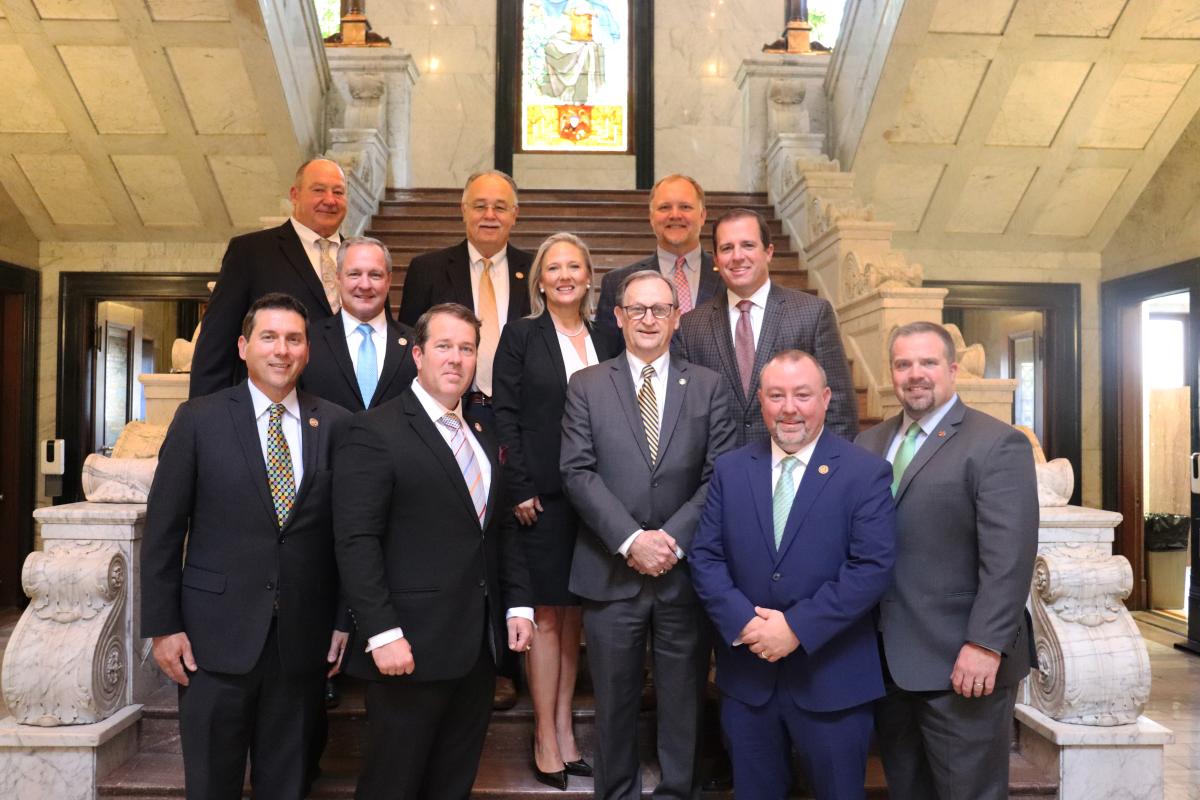
House members took the oath of office on the first day before the election of Speaker of the House and Speaker Pro Tempore. As part of the House Rules, both positions and the House Clerk are elected by the members and are sworn into office on the first day of session. Representative Jason White (R – West) was elected Speaker of the House after previously serving as Speaker Pro Tempore. Former Local and Private Chairman Manly Barton (R – Moss Point) was chosen as Speaker Pro Tempore. Andrew Ketchings was re-elected as House Clerk for his fourth term.
Members also had to elect fellow representatives to serve on both the Management and Rules committees. All members split into the four Mississippi congressional districts and nominate members to serve on these committees. Both committees are comprised of two members from each of the congressional districts, as well as the Speaker and the Pro Tempore.
Speaker Jason White announced several new House committees, including a major change to Appropriations. There will be four new standing committees within Appropriations (Appropriations B, Appropriations C, Appropriations D and Appropriations E), and these will each be comprised of eight members from the main Appropriations Committee. The Chairman of Appropriations will also serve as an ex officio voting member of the four committees. Each committee will be tasked with a portion of the state budget. Other new committees include Business and Commerce, Housing and State Affairs.
Six statewide elected officials were sworn into office by Chief Justice Michael Randolph before a joint session of the House and Senate on Thursday, January 4. The joint session also re-elected Steven Parks as state librarian.
The inauguration ceremony of Governor Tate Reeves is scheduled for next Tuesday, January 9 at 10:30 a.m. before a joint session of the House and Senate.
Early Wednesday morning, officials received a bomb threat to the Capitol, and the building was evacuated. The Mississippi Department of Public Safety conducted a thorough sweep of the premises and gave the all-clear around 11 a.m. A similar threat was made on Thursday morning to the Capitol, Mississippi Supreme Court and some Hinds County buildings. Mississippi was one of several states that received a bomb threat, and the FBI announced these were all hoaxes.
The Capitol was overflowing with guests this week due to inaugurations. Visitors to the Capitol are always welcome to meet with their legislators and witness the legislative process.
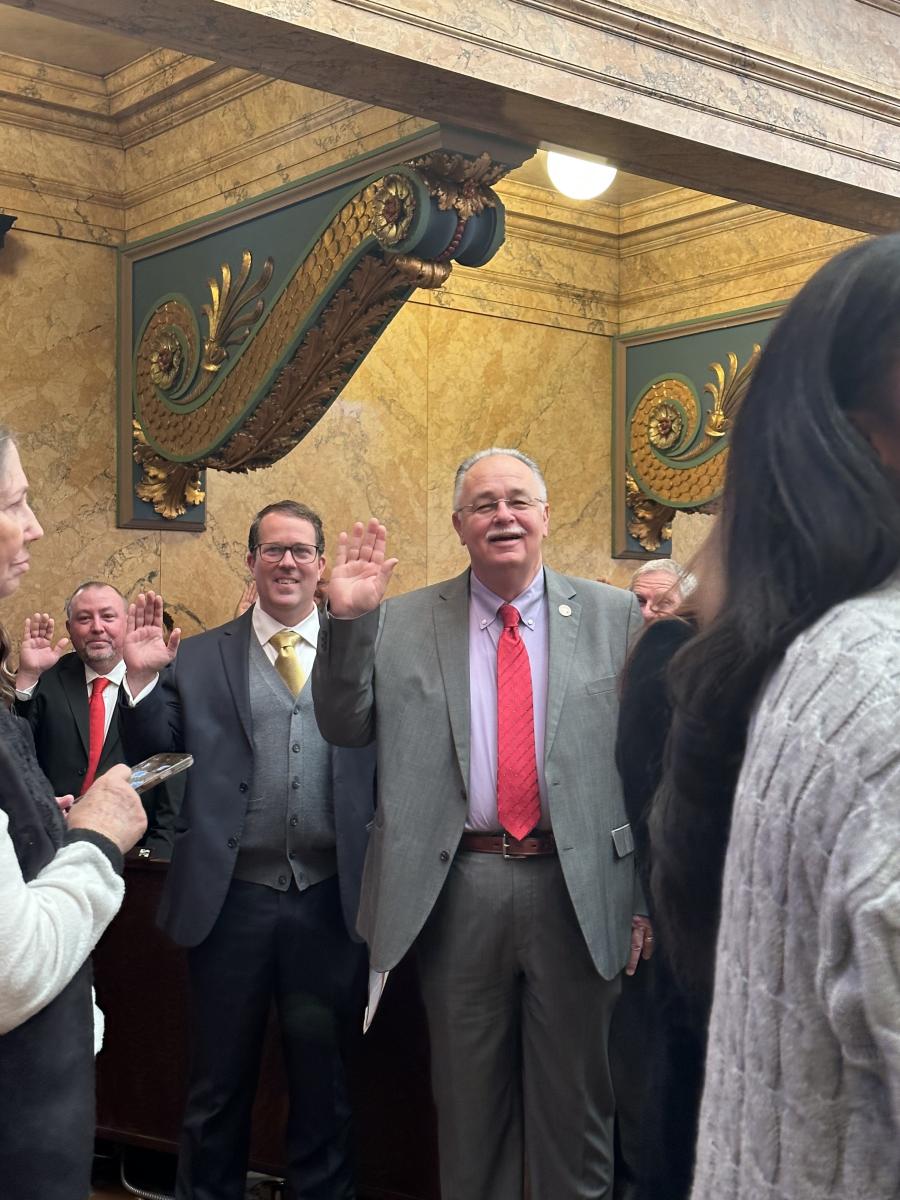
Being Sworn in January 2, 2024